Rusted lintels can crack an entire brick facade. Learn the warning signs before a small repair becomes a major rebuild.
Many brick walls have a lintel above each window, door, or other opening. In common Chicago-area masonry construction, that support may include a concealed or exposed steel angle that carries brickwork across the opening. When steel corrodes, expands, or loses section, the surrounding brick and mortar may begin to move. Catching the warning signs early can help you understand when a masonry inspection is warranted.
What Does a Brick Lintel Do?
A lintel supports masonry over an opening and transfers its load toward the adjacent wall. The exact construction varies with the building's age, materials, and wall system. A steel lintel may sit just behind the outer brick, so homeowners often notice changes in the masonry before they realize metal support is involved.
1. Stair-Step Cracks Above a Window or Door
Cracks that follow mortar joints diagonally or upward from an opening can indicate movement in the surrounding masonry. A corroding lintel is one possible cause, especially if the cracking is concentrated directly over an opening. Settlement, thermal movement, and other structural conditions can create similar patterns, so the location of a crack is a clue, not a diagnosis.
2. Rust Stains Near the Top of an Opening
Orange or brown staining below a steel angle or on nearby brick can signal that steel is corroding or that rust-colored water is draining from metal components. Rust does not automatically mean a lintel requires replacement, but persistent staining deserves attention when accompanied by mortar cracks or displacement.
3. Bricks Pushing Out or Bulging
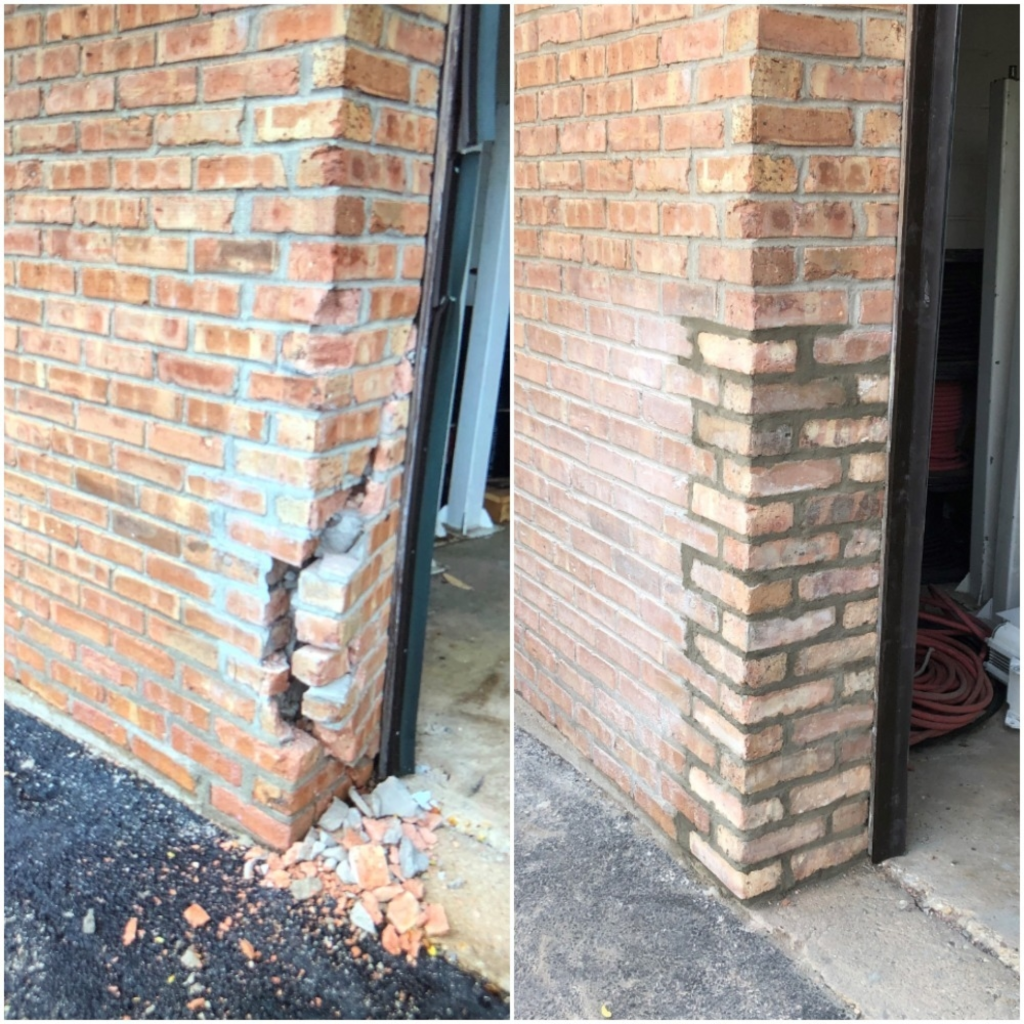
As rust builds up on steel, it occupies more space than the original metal and can exert pressure on the surrounding masonry. Bricks may project outward, joints may open, or the wall surface may develop a slight bulge over a window. This can become a falling-masonry hazard, particularly over walkways and entries.
4. Sagging Brickwork or Gaps at the Opening
A noticeable change in the brick alignment above a door or window, gaps at the head of the frame, or widening separations may mean the support system or surrounding masonry is moving. The cause must be evaluated before choosing a cosmetic repair. Do not remove brick or steel around a suspected failed lintel without a plan for proper support.
5. Recurring Water Entry and Deteriorating Mortar
Water staining, damaged sealant, wet brick, and repeated mortar failure near an opening may point to defective flashing or other water-management details. Continued moisture exposure can accelerate steel corrosion. Repointing alone may not stop the problem if the source of water remains.
What Causes Steel Lintel Damage?
- Moisture reaching vulnerable or poorly protected steel.
- Missing, deteriorated, or poorly detailed flashing around an opening.
- Age and repeated exposure to weather.
- Movement in adjacent masonry or insufficient support details.
- Prior repairs that conceal rather than correct the water-entry problem.
Can a Lintel Be Repaired, or Must It Be Replaced?
The answer depends on the lintel's condition, the masonry it supports, and the source of the deterioration. Limited surface corrosion and sound support may call for a different scope than extensive metal loss, distortion, or unstable brickwork. Significant lintel deterioration can require temporary support, removal of affected masonry, steel replacement, and restoration of proper water-management details.
A qualified masonry contractor can inspect visible symptoms and determine whether additional structural evaluation is appropriate. Engineering review may be needed when load paths, significant movement, or unusual construction conditions are involved.
Safety first: if bricks are visibly loose, bowing, or falling above an occupied doorway or sidewalk, keep people clear of the area and arrange a prompt professional evaluation. Do not try to pry out a steel angle or repair a potentially load-bearing opening yourself.
What to Photograph Before Requesting an Estimate
Take one wide photograph showing the complete door or window and the brick courses above it. Add close-ups of rust, cracking, displacement, and any water staining. Mention whether the damage appears to be changing. Those photos help a contractor prepare for inspection, but concealed steel and support conditions may still require an on-site assessment.
Address the Cause, Not Just the Crack
Fresh mortar can conceal symptoms temporarily while the lintel continues to deteriorate. A durable scope should consider the metal support, affected bricks, joint condition, flashing, and pathways for water. Chicagoland Masonry & Concrete provides brick and lintel-related masonry restoration throughout Chicagoland, including repair of surrounding brickwork when needed.
Veteran-Owned · Chicagoland
Have a Project in Mind?
We offer free estimates with no pressure and no obligation. Response within one business day.
Related Services
Keep Reading